This guide breaks down Warren Buffett’s 2025 stepdown as Berkshire Hathaway’s CEO, explores his enduring impact on investing, and examines what Greg Abel’s succession might mean for the conglomerate’s future—essential insights for U.S. investors and followers of the iconic “Oracle of Omaha.”
The Transition: A Quiet Exit After 60 Years
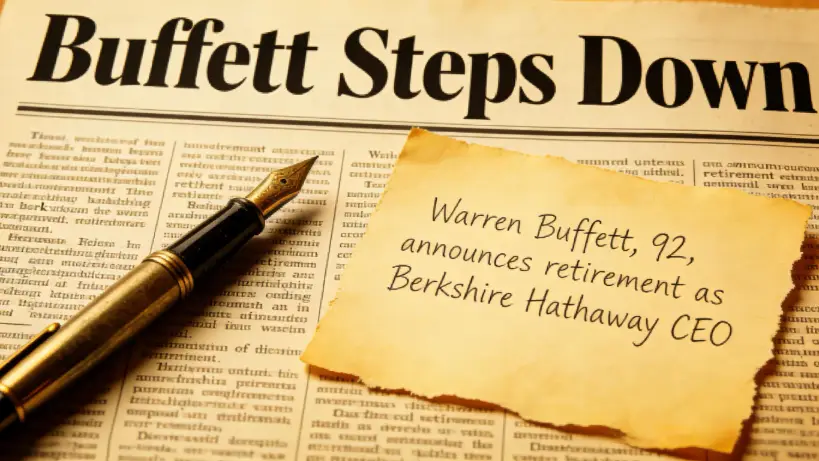
At 95, Warren Buffett announced he will step down as Berkshire’s CEO by late 2025 in his November 10 Thanksgiving shareholder letter, closing the book on a six-decade tenure leading the company.
He will stay on as chairman, with long-time deputy Greg Abel tapped to take over the CEO role.
Buffett’s exit will bring permanent changes to key Berkshire traditions: he will no longer pen the annual shareholder letters or oversee the beloved annual meetings.
To boost his charitable efforts, he is converting 1,800 Class A shares (valued at $1.3 billion) to Class B shares for donations to family foundations, speeding up his giving timeline.
The Legacy: Redefining Value Investing Globally
Buffett turned Berkshire from a struggling textile company into a trillion-dollar conglomerate, a achievement rooted in Benjamin Graham’s value investing principles.
His strategy of buying undervalued companies for the long haul became a global benchmark, with his annual shareholder letters widely regarded as the bible of investing.
Research indicates his insights in those letters have historically spurred a 30% increase in capital inflows to the sectors he highlights.
His famous contrarian advice—Be fearful when others are greedy, and greedy when others are fearful—remains a cornerstone of investing strategies worldwide today.
The Market Impact: Uncertainty Amid a Lasting Legacy
Berkshire’s Class A shares have fallen 11% since Buffett first hinted at retirement in May, underperforming the S&P 500 during that same period.
Investment bank Keefe, Bruyette & Woods (KBW) recently downgraded the stock, noting concerns that the Buffett premium could diminish once he steps down.
Buffett has vowed to keep a significant Class A stake until shareholders warm to the new leadership, reinforcing his confidence in America’s economic recovery and Berkshire’s long-term potential.
While short-term market fluctuations are noticeable, his legacy goes far beyond cash reserves—his discipline and wisdom reshaped how investors approach long-term value creation.
Leave a Reply